
Project Management details Waterfall
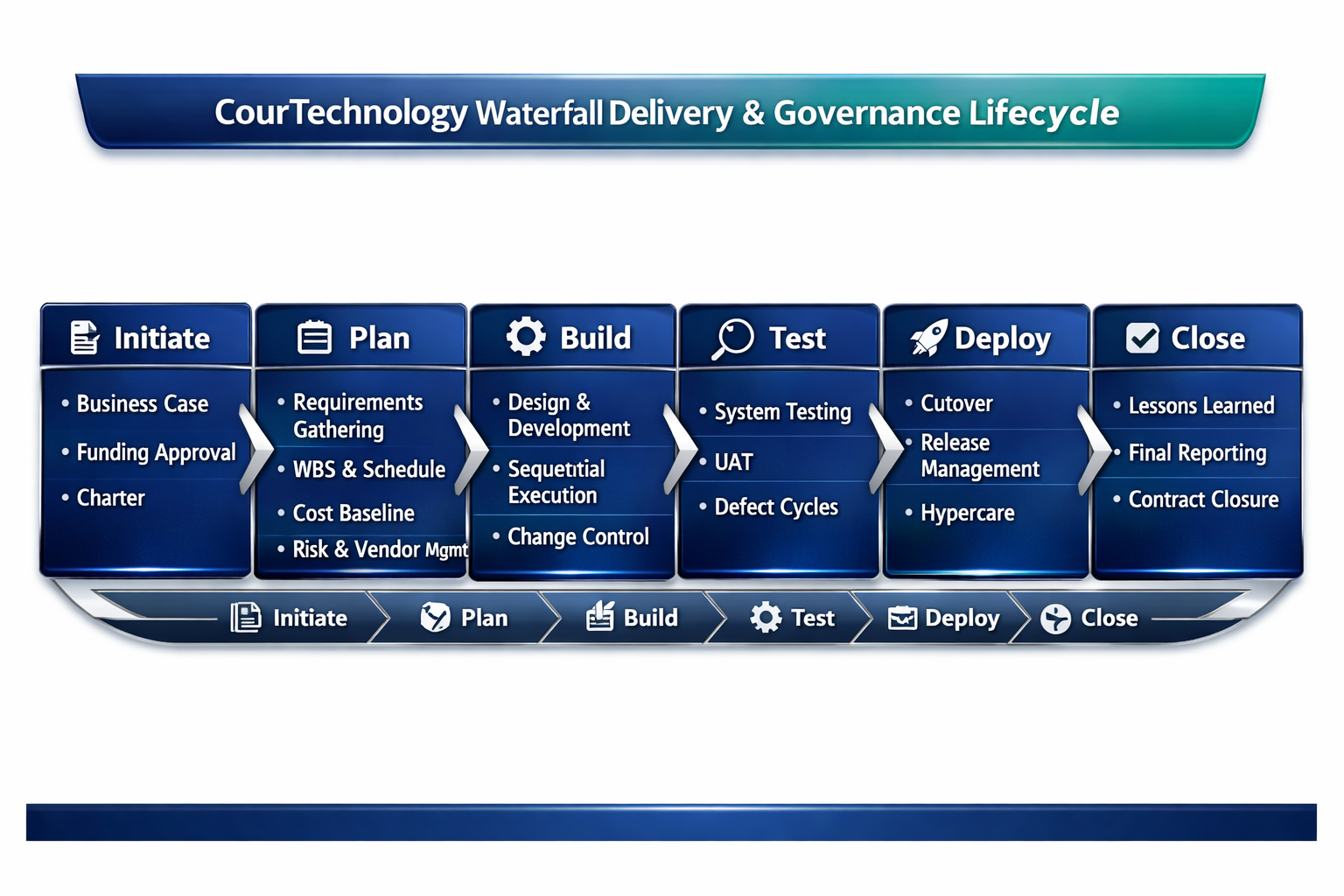
INITIATING
Develop Project Charter
Identify Stakeholders
PLANNING
Develop Budget
Plan Quality Management
Plan Resource Management
Plan Communication Management
Plan Risk Management
Plan Procurement Management
Plan Stakeholder Management
Develop Project Management Plan
Define Scope
Create Network Diagram
Define Work Breakdown Structure (WBS)
Define Activity Resources
Estimate Activity Durations
Develop Gantt Chart - schedule
Estimate Costs
EXECUTING
Manage Project Work
Perform Quality Assurance
Acquire Project Team
Develop Project Team
Manage Project Team
Conduct Procurements
Manage Stakeholders
MONITORING & CONTROLLING
Control Quality
Control Communications
Control Risks
Control Procurements
Control Stakeholder Engagement
Monitor and Control Project Work
Perform Integrated Change Control
Validate Scope
Control Scope
Control Schedule
Control Costs
CLOSING
Close Project or Phase
Close Procurements
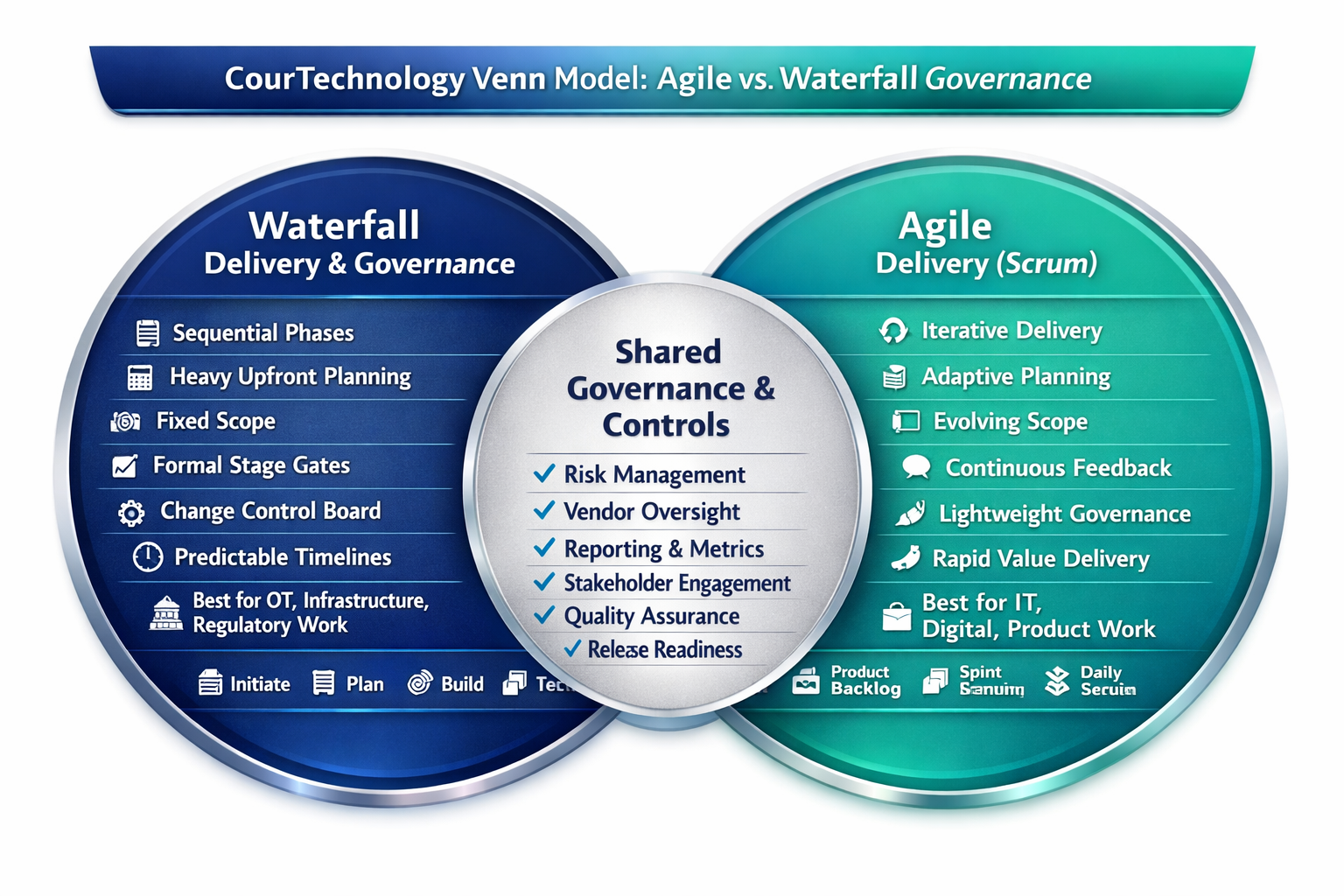
Project Management details -Agile (Scrum‑Based)
Core Agile Roles
Product Owner (PO) — Owns the Product Backlog, defines priorities, sets vision, accepts work.
Scrum Master (SM) — Facilitates ceremonies, removes impediments, coaches the team.
Development Team — Cross‑functional group delivering the Increment each sprint.
Project Manager (in Agile environments)
Manages governance, budget, vendor coordination, risks, dependencies, reporting, and alignment with PMO/stakeholders.
Ensures Agile delivery fits within contractual, regulatory, or enterprise constraints.
Agile Ceremonies (In Delivery Sequence)
A. Sprint Planning
Purpose: Define what the team will deliver in the upcoming sprint. Inputs:
Prioritized Product Backlog
Team capacity
Velocity
Definition of Ready (DoR)
Activities:
PO presents highest‑value backlog items.
Team selects stories they can commit to.
Stories are broken into tasks.
Sprint Goal is defined.
Outputs:
Sprint Backlog
Sprint Goal
Commitment for the sprint
B. Daily Scrum (Daily Stand‑Up)
Purpose: Synchronize the team and adjust the plan for the next 24 hours. Format: 15 minutes, same time every day.
Team answers:
What did I complete yesterday
What will I complete today
What’s blocking me
Outputs:
Updated Sprint Backlog
Identified impediments for the Scrum Master to remove
C. Backlog Refinement (Ongoing, Mid‑Sprint)
Purpose: Prepare upcoming work so future sprints run smoothly.
Activities:
Clarify requirements
Add acceptance criteria
Split large stories
Re‑estimate
Re‑prioritize
Outputs:
A clean, prioritized Product Backlog
Stories meeting the Definition of Ready
D. Sprint Review
Purpose: Demonstrate completed work and gather feedback.
Activities:
Team demos the Increment
PO validates acceptance criteria
Stakeholders provide feedback
Backlog is updated based on learnings
Outputs:
Accepted stories
Updated Product Backlog
Adjusted roadmap or priorities
E. Sprint Retrospective
Purpose: Inspect and improve team processes.
Activities:
What went well
What didn’t
What to improve
Select 1–2 actionable improvements for next sprint
Outputs:
Retrospective action items
Continuous improvement commitments
Agile Artifacts
Product Backlog
Ordered list of all work (epics, stories, bugs, tech debt)
Owned by the Product Owner
Continuously refined
Sprint Backlog
Stories + tasks committed for the sprint
Owned by the team
Updated daily
Increment
Working, tested, potentially shippable product
Must meet the Definition of Done (DoD)
Definition of Ready (DoR)
Criteria a story must meet before entering a sprint (clear description, acceptance criteria, estimates, dependencies resolved)
Definition of Done (DoD)
Criteria for completed work (coded, tested, integrated, documented, accepted)
Agile Delivery Flow (End‑to‑End)
Product Backlog → Sprint Planning → Sprint Execution → Daily Scrum → Backlog Refinement → Sprint Review → Sprint Retrospective → Next Sprint
Project Manager Responsibilities in Agile
This is where your hybrid experience shines.
Maintain alignment with PMO governance and stage gates
Manage budget, schedule, risks, vendors, and contracts
Coordinate cross‑team dependencies
Ensure readiness for releases (training, OCM, cutover, support)
Protect scope boundaries while enabling Agile flexibility
Report progress using Agile metrics (velocity, burndown, throughput)
Ensure the team has what it needs to deliver each sprint
Agile Metrics (Used for Reporting & Control)
Velocity — Story points completed per sprint
Burndown Chart — Remaining work vs. time
Burnup Chart — Work completed vs. total scope
Cycle Time / Lead Time — Speed of delivery
Team Capacity — Hours or points available per sprint
Escaped Defects — Quality indicator
Agile Planning Levels
Product Vision — Why the product exists
Roadmap — High‑level timeline of features
Release Plan — What will be delivered in each release
Sprint Plan — What will be delivered this sprint
Daily Plan — What will be delivered today
